
Using mRNA technology a breakthrough as been made in the treatment of skin cancer using a targetted vaccine.
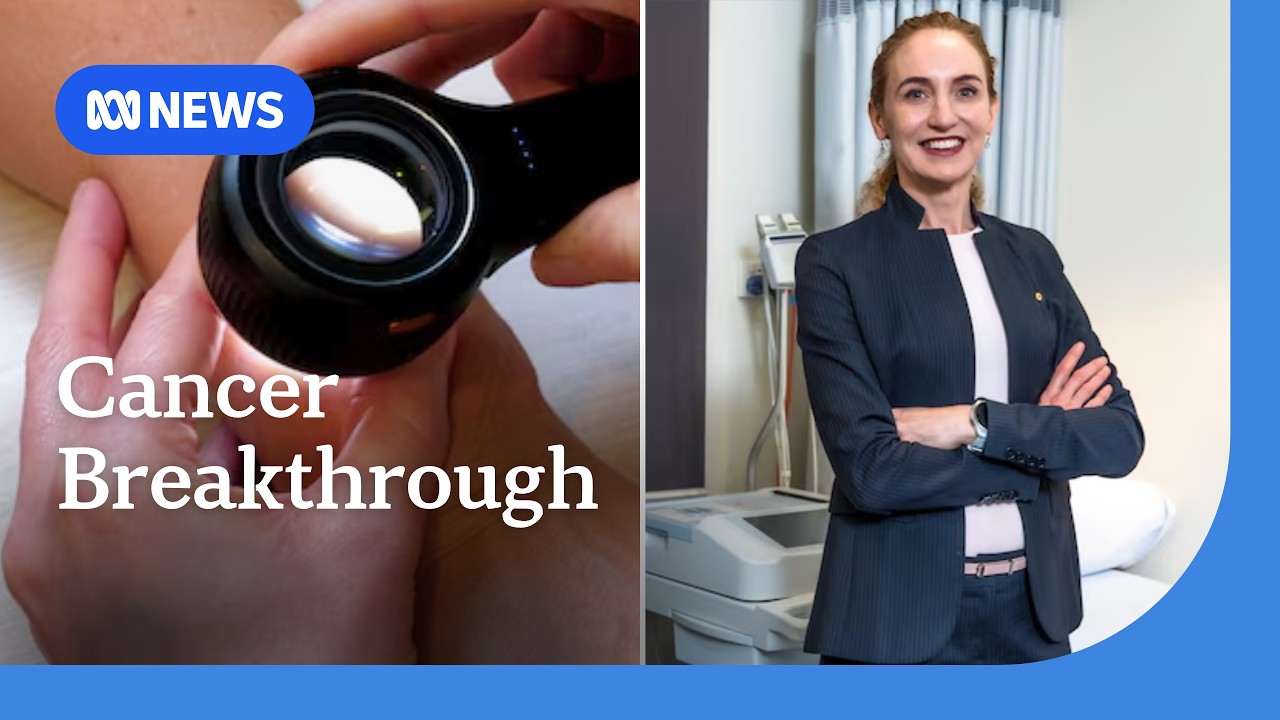
If other cancers can be targetted so specifically then is it the end of cancer as a terminal illness?
Using mRNA technology a breakthrough as been made in the treatment of skin cancer using a targetted vaccine.
If other cancers can be targetted so specifically then is it the end of cancer as a terminal illness?
Let’s hope so Bruce - but how many times have we heard that?
And there’s certainly been a lot about cancer on social media recently - kinda crazy that despite spending 200 billion a year cancer rates have gone up by over 100% since the 90s…
https://www.tiktok.com/@maksim_5152/video/7665114035674696978
(He’s got his figures wrong - he says 75%, but they’ve actually gone up by over 100% since the 90s)
It is not surprising. People are living longer, old age is when cancers tend to start as the cells age.
UK life expectancy in 1990 was 75.14 in 2020 it was 81.15. That is six more years for cancer to develop.
There is an alarming rate of young people now suffering with tumours and various types of cancer Bruce, not just the old.
Trouble is, they find a cure for one thing and something else comes to the fore.
Perhaps it’s the cure?
There are also a lot more young people but as a proportion of the population their cancer rates are trivial, child mortality rates have fallen in the UK there were 918 deaths in the 1 to 15 age group down from 981 the previous year hardly an alarming mortality rate.
According to the UK Cancer Council:
More than half (53%) of all new cancer diagnoses are in people age 70 and over. Almost 4 in 10 (38%) are in people aged 50 to 69. Since the early 1990s, cancer incidence rates in the UK have risen across all age groups.
IE over 90% of new cancer diagnoses are in people aged 50 or over.
There are so many factors - we have a far higher rate of vigilance, screening and detection & treatment of cancers early. People are far more likely to engage with a service if they spot a lump or mole or have unusual symptoms. The older population is growing probably because of the increased treatment and detection at a younger age. Many here including yourself have survived cancer for many years.
In the meantime we have been exposed to some lifestyle and environmental factors that can cause cancer, but others such as smoking and certain pollution has been very much reduced. They also have the HPV vaccine which should reduce cervical and throat cancer rates long term.
So it’s difficult to tell whether there are true increases overall because you have to smooth out the data for all the variables. But doubtless there are new cancer causes in ultra processed food, electromagnetic fields, pesticides if you live near agricultural land (pesticides/herbicides) or chemical industrial land/factories (PFAs), as well as widespread access to alcohol, additives and just leakage from manufactured goods such as volatile organic compounds (new car smell). Better to buy second hand than pay a premium price for leaky new goods. The more you have done to your house the higher the risk of breathing in or being exposed to potential carcinogens.
So I think swings and roundabouts. I doubt we will ever cure it any more than we have cured the common cold, but hopefully the treatments will become less medieval.
Not sure about a ‘cure’ as such, but certainly the treatments are getting better, which means a longer life expectancy after a diagnosis.
A real breakthrough would be for a successful treatment for say pancreatic cancer, where life expectancy is fairly short after a diagnosis.
But research needs money, and why cancer research need donations to continue their work.
Over the years i tend to spend less on buying presents at Christmas time, but instead will donate to various charities that are important to me.
Most of us know someone who has cancer, have lost a close family member to cancer, or have had it ourselves, so donating to the research in to this disease is, for me, the right thing to do.
Despite all of the official figures Bruce I’m only going on my personal experiences from friends and family and the local news/gossip. There are several children in South Yorkshire that are being treated for some sort of cancer at the Weston Park Hospital in Sheffield. A very disturbing rise of cases over the last few years.
A nurse who I spoke to who had worked in the cancer unit explained that 30 years ago when she started working there, the number of cases she saw each week amounted to no less than 20 or 30. They get twice that number now each day, with an unusual amount of young people.
Statistics and figures rarely tell the whole story, but visiting the hospital and talking to the staff gives a far more accurate picture. Probably locations vary.
I’d agree Bob. When I was in my teens/20s, it was rare, now, so many people are getting it or dying from it.
I also think it’s absurd to think that the increased deterioration in quality of food, increase in microplastics in our food and water, increase of toxins and radiation in our atmosphere has nothing to do with the increase - as always the greedy are to blame, in their pursuit of profit they could not give a damn that they are poisoning/killing everyday people and the planet.
Are people forgetting articles like this from 2006?
Human species ‘may split in two’
Humanity may split into an elite and an underclass, says Dr Curry
Humanity may split into two sub-species in 100,000 years’ time as predicted by HG Wells, an expert has said.
Evolutionary theorist Oliver Curry of the London School of Economics expects a genetic upper class and a dim-witted underclass to emerge.
The human race would peak in the year 3000, he said - before a decline due to dependence on technology.
People would become choosier about their sexual partners, causing humanity to divide into sub-species, he added.
The descendants of the genetic upper class would be tall, slim, healthy, attractive, intelligent, and creative and a far cry from the “underclass” humans who would have evolved into dim-witted, ugly, squat goblin-like creatures.
Race ‘ironed out’
But in the nearer future, humans will evolve in 1,000 years into giants between 6ft and 7ft tall, he predicts, while life-spans will have extended to 120 years, Dr Curry claims.
Physical appearance, driven by indicators of health, youth and fertility, will improve, he says, while men will exhibit symmetrical facial features, look athletic, and have squarer jaws, deeper voices and bigger penises.
Women, on the other hand, will develop lighter, smooth, hairless skin, large clear eyes, pert breasts, glossy hair, and even features, he adds. Racial differences will be ironed out by interbreeding, producing a uniform race of coffee-coloured people.
However, Dr Curry warns, in 10,000 years time humans may have paid a genetic price for relying on technology.
Spoiled by gadgets designed to meet their every need, they could come to resemble domesticated animals.
Receding chins
Social skills, such as communicating and interacting with others, could be lost, along with emotions such as love, sympathy, trust and respect. People would become less able to care for others, or perform in teams.
Physically, they would start to appear more juvenile. Chins would recede, as a result of having to chew less on processed food.
There could also be health problems caused by reliance on medicine, resulting in weak immune systems. Preventing deaths would also help to preserve the genetic defects that cause cancer.
Further into the future, sexual selection - being choosy about one’s partner - was likely to create more and more genetic inequality, said Dr Curry.
The logical outcome would be two sub-species, “gracile” and “robust” humans similar to the Eloi and Morlocks foretold by HG Wells in his 1895 novel The Time Machine.
"While science and technology have the potential to create an ideal habitat for humanity over the next millennium, there is a possibility of a monumental genetic hangover over the subsequent millennia due to an over-reliance on technology reducing our natural capacity to resist disease, or our evolved ability to get along with each other, said Dr Curry.
He carried out the report for men’s satellite TV channel Bravo.
I’d be amazed if the human species is still around in 10,000
Anyway, Dr Curry is making wild speculations.
Chances are that the very things that may lead to someone getting a cancer are the very things that may have prevented them getting something else.
I don’t think the human race will get there will it?
In general we’re just not geared for survival any more.
Without sounding overly pessimistic I don’t think it’s so much that we are living longer … it’s simply more a case of it’s taking us longer to die.
Drugs and medical advances are just helping us ‘live’ with diseases and physical impediments.
If we don’t get there, then we have the greedy hoarders of wealth and the world’s natural resources to blame - they are the root of almost every problem on this planet:
That’s a lovely idea, but I fear that it flies in the face of human nature. 
Yes if we are taking longer to die, then we are in fact living longer!
And i think i speak for many people who are grateful to medical research for providing the drugs and treatments required to keep us enjoying life for much longer than we would have done without them.
I’m not doubting that many people are grateful to be ‘living longer’ … even if they are no longer enjoying life with 100% mobility or efficiency or independence.
Certainly if anyone , asked which had been their best decade for health and enjoyment or what they considered ‘their peak’ … very few would pick any decade over 50 or choose their 80’s and 90’s .
I passed my peak a long time ago but I am still enjoying a good quality of life in my late eighties.
Me too, I’m past my peak … I reckon the best decade is your 30’s … on many levels.
Me too. I’m over the hill and I’m only 22. 
It’s always possible you’re a late developer and so haven’t yet peaked?
Well, I’m cutting it fine then
