
The Spanish continue what? The Swiss got over what?
1 Like
Nazi Don and the Nazi GOP didn’t get the memo!!!
1 Like
Being Freeloaders
1 Like
Does Switzerland contribute to Nato?
We did, the thin end of the wedge on the streets of London, and we all know who put it there, Russia/Iran/China. They all hiss in the same pot and are bound at the hip.
1 Like
Not directly, then they never let Nazi subs refuel in their ports.
you best study your history!
In respect of what Senile. Are you saying that Spain did not side with the Nazis in WW2 and allow them to use their ports for refuelling their subs in order to attack the Atlantic conveys, killing my father in Spanish waters in what was a disastrous and very dangerous mission at that time, while trying to prevent it?
That would be the Catholic Church, which has been repeatedly rocked by child sexual abuse scandals over the last three decades.
That was a regime which is long gone. Italy, Romania, half of France, Russia, Oh yes the USA until Pearl Harbor among others were also neutral or aiding Germany to some extent during WWII. That is why we have had an alliance all these years since that terrible conflict. Switzerland laundered Germany’s gold and never returned it all to victims. US companies were sending money for German arms before the US joined the allies. What has that to do with the Middle East now?
Did someone post about future resulting trust levels, or does that only apply to the USA and Israel?
I don’t understand your question. For inexplicable reasons you have been knocking Spain because of something that happened in the 1930s / 1940s during a civil war there. Knock the US too while you’re at it. They were pumping money into Germany for their axis aggression before they joined the allies. Perhaps the money that went to Spain way back then came from the US in the first place.
1 Like
You are not keeping up to date about the Spanish situation Annie, we were posting about who we can now trust and rely on and I posted Spain, for obvious reasons

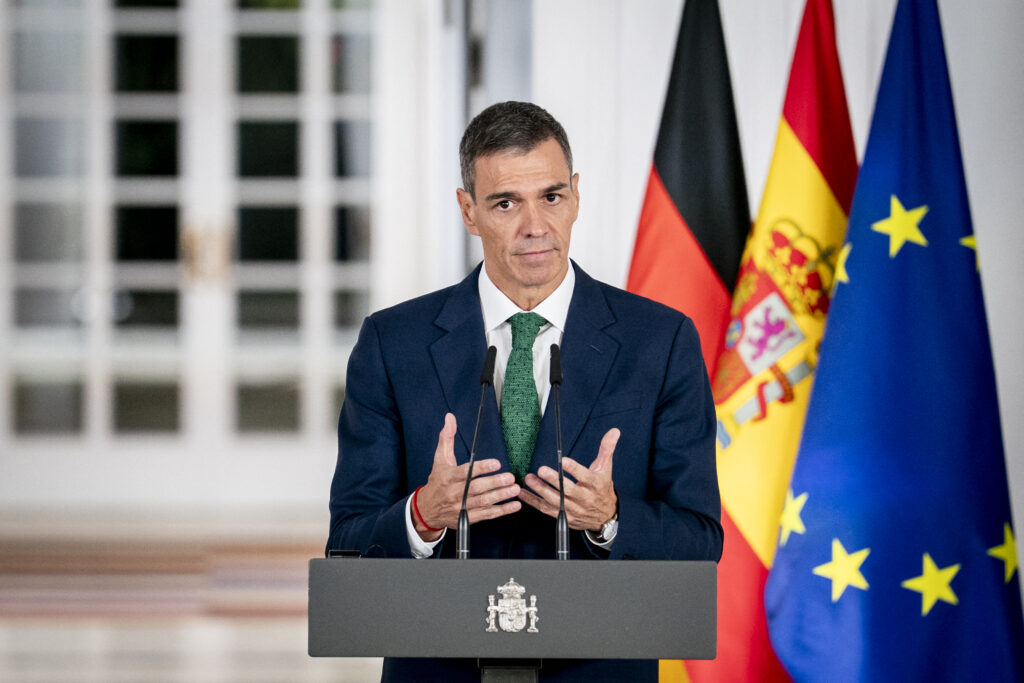
When NATO allies agreed this year to significantly raise their defense spending, one country stood apart: Spain. In June, under US pressure, NATO adopted a new goal of spending 5 percent of gross domestic product (GDP) on defense by 2035, with 3.5 percent going toward core military needs and 1.5 percent designated for related areas such as cyber and infrastructure. Spain, however, was the only member of the thirty-two-nation Alliance that refused to commit to this target. Instead, Prime Minister Pedro Sánchez secured a special exemption for Madrid, insisting Spain would cap its military budget at approximately 2.1 percent of GDP, a level he described as “sufficient and realistic.”
This opt-out has made Spain an outlier within the Alliance. In October, US President Donald Trump even suggested that NATO should consider Spain’s expulsion over its unwillingness to contribute more, calling the country a “very low payer” and hinting at potential trade retaliation.
Spain’s persistent spending shortfall
Spain’s defense spending has long fallen short of NATO’s benchmarks. Under the previous NATO benchmark of reaching 2 percent of GDP in military spending by 2024, Spain consistently underperformed, spending only about 1.2 percent in recent years. In 2024, its military budget stood at approximately €17.2 billion, or 1.24 percent of the country’s GDP, the lowest among NATO members as a percentage of economic output.
Meanwhile, most allies have increased spending to levels closer to or above 2 percent in response to Russia’s aggression in Ukraine. As Atlantic Council Fellow Andrew Bernard noted, Spain’s promise to reach 2 percent, which it only committed to in April of this year, has yet to translate into the modern military capabilities the Alliance needs. Although Spain contributes approximately three thousand troops to NATO missions from the Baltics to the Sahel, deployment alone does not substitute for investment in equipment, readiness, and modernization.
Few within the Alliance believe Spain can meet NATO capability requirements by spending just over 2 percent of its GDP. This gap only deepens the impression that Spain is benefiting from NATO without fully contributing to it.
Domestic politics: The main barrier to higher spending
Why does Spain lag so far behind in defense spending when it is one of the fastest-growing economies in the eurozone? The answer lies mainly in domestic politics and public opinion.
Sánchez leads a fragile minority coalition dependent on left-wing and regional nationalist parties that are skeptical of increased military spending. His Socialist Party governs in partnership with the far-left parties Unidas Podemos and Sumar, and it relies on small Basque and Catalan nationalist parties to maintain a parliamentary majority. These partners view military investment with suspicion, fearing that higher defense budgets would come at the expense of social spending programs.
As Ione Belarra, one of the leaders of Podemos, bluntly put it, these parties refuse to help the government “continue licking the boots of the United States.” Pro-independence Catalan and Basque parties are equally unwilling to strengthen the Spanish army, which they historically distrust.
Public opinion reinforces these pressures. The legacy of Francisco Franco’s dictatorship left Spaniards skeptical of the military for decades, and while the armed forces have gradually gained trust through peacekeeping and humanitarian missions, there remains limited enthusiasm for large budget increases. In a recent poll by the national polling institute CIS, only around 14 percent of Spaniards supported significantly increasing the military budget, as most prioritize healthcare and education.
Spain’s official neutrality during both world wars and its largely peripheral role during the Cold War helped shape a political culture that views defense as secondary to social welfare.
A weaker ally means weaker influence
Spain’s unwillingness to spend on defense comes at a cost, particularly to its image abroad. Eastern European NATO members such as Poland and the Baltic states, which are investing heavily in defense, may interpret Spain’s stance as a troubling lack of solidarity at a critical time. Burden-sharing in NATO is ultimately about sharing risk. Spain’s refusal to invest in new capabilities raises concerns over its willingness to do so. And that reluctance carries risks of its own, given the security challenges it faces at home, including tensions with Morocco over the bordering Spanish cities of Ceuta and Melilla, migration pressures, and instability across the Mediterranean, which could require NATO support in the near future.
The practical implications of this credibility gap are already visible. Diplomatically, Spain has found itself sidelined in some high-profile discussions on European security. In August, for instance, Sánchez did not take part in a White House meeting of key European leaders on Ukraine, a signal of its second-tier status among allies. If Madrid is perceived in Washington or Brussels as an unreliable partner on defense, it risks further losing influence, not just on defense and security issues, but in crucial areas such as trade, as well.
The spectacle of being publicly singled out by the US president only deepens the damage. Trump’s sharp criticism of Spain and his threat of tariffs have reinforced the country’s image as an underperforming and unreliable ally. The idea that Sánchez leads “an anti-Trump coalition” may play well domestically, but it has done little to strengthen Spain’s standing abroad. In reality, no such coalition exists, and the Spanish government has failed to find allies or present any credible alternative approach, leaving Spain isolated and exposed. Consequently, Spain’s internal vulnerability is translating into external weakness.
Spain needs to make hard choices
Spain now faces a strategic choice. On the one hand, the Sánchez government can continue trying to appease its domestic political partners, delaying or limiting defense investments to maintain the support of far-left and regional factions. This path may ensure short-term governmental stability, but it will likely further erode Spain’s standing within NATO and Europe.
On the other hand, it could make the hard political choices needed to shift course, accepting that Spain’s internal fragility is already damaging its international credibility. Until then, Spain will continue to be seen as NATO’s easy target.
The Sánchez government cannot have it both ways. A country cannot expect to benefit from NATO membership with deterrence, geopolitical influence, and allied solidarity, while not meeting the targets that almost all allies, even poorer ones, are striving to meet. If Spain wants to become a reliable ally, it will need to demonstrate, not just declare, a stronger commitment. That means real budgetary increases that translate into modern jets, ships, and infrastructure.
what has that to do with the civil war in Spain & Franco?
We have covered that Annie. A bit like Edward 1.and the Welsh.
The good news. The UK has one new carrier it could send to support the conflict. The bad news, we do not have any working frigates, destroyers, and a Sub to support it, and we would need French and USA vessels to help us out. This country has gone to pot and is a total embarrassment.
1 Like
So you agree it’s totally irrelevant to Trump’s attack on Spain the other day. Because you can also discuss the USA’s funding of the German regime during WWII probably via laundered Swiss francs no doubt if you want to bring up old history and how the US is letting down Europe today. History repeating itself until the US itself is in need of help.
3 Likes
No, what I am saying is Spain’s past is not it’s present, on the other hand, the same can be said for the US (our past is not our present) and Nazi Don. An interesting fact, the Catholic Church was supportive of Mussolini : The Lateran Treaty of 1929 established Vatican City as an independent state, solidifying Church-state relations.
- Mussolini’s regime provided the Church with financial support and recognition of its authority.
- The Church viewed Mussolini as a bulwark against communism and secularism in Italy.
- Catholic social teachings aligned with some of Mussolini’s nationalist policies, fostering mutual support.
- The regime promoted Catholic education and youth organizations, enhancing Church influence.
…and yet few choose to point this out, while being quick to point out Germany and Italy. Japan’s government was a militaristic empire rather than a Fascist State, The ruling class included military leaders who prioritized expansionism over fascist ideology.
that’s great news because we do not want to get involved in this pointless destruction. I don’t see how it’s of any benefit to the UK or Europe to be part of such a mess.
2 Likes
Hmm … not the same thing I know but it’s reported today that Israel are unlawfully using white phosphorous in Lebanon.
Doesn’t that burn right down to the bone?