
Water supplies are getting low, we need to start diluting the water soon!!
1 Like
Plan v 2
So we are all aware that certain events frequently suffer from rain washing out some of the event. I can point to Wimbledon and Glastonbury - there will be many other good examples. Perhaps key football fixtures, or fetes, or weddings. All we need to do is reschedule all of these for the same weekend. Job done.
They need to appoint a minister for drought, they did this during the 1976 heatwave, a few days later it chucked it down…
2 Likes
Why are they making such a fuss just because we are having a good summer for a change and some people are going round setting fire to woodland… 
Heck, its going to reach 21 deg C in Aberdeen today and tomorrow. Whilst that is “taps off” weather for that region, where I am it will be almost double that temperature. And this is now the ninth consecutive week of well over 30 deg temps every day (except for a couple of days at 28-29deg). To be clear, I’m not making a fuss. I’ve adapted to this heat without aircon. But it does limit what you can do in a day. And thank goodness my commuting days are long behind me.
2 Likes
Yes Lincs, I understand you are having quite a heatwave in the rest of Europe, must be hard to do anything. Even here in the high 20’s it gets too much for me these days, so like you, I go for my walk early in the morning and avoid the midday heat.
Biking’s not too bad with the breeze, so I’ve been oiling my chain and pumping up the tyres and enjoying a few miles out in the country after the rush hour traffic has calmed down.
With my workshop up in the loft it has been far too hot to continue with any hobbies…
I did venture up there to finish a job the other day and the temperature rose to 35ºC…

Instant sweat, but it felt nice and cool when I came down…
Just my perception Foxy but I’m not seeing many people having a “good” summer as far as the weather is concerned  Travelling by public transport, trains etc is probably a last resort excepting the die hard sun worshipers heading for the coast and those that have no option but to commute.The ground is parched and cracking causing fractures and leaks in our already inadequate water supplies, and yes, idiots that use disposable barbeques in parks and woodland.
Nah!
Much anticipating a mellow Autumn, hopefully some rain before October! 
2 Likes
I agree Chilli six weeks ago we had to cancel a weekend away because it was too hot.
1 Like
Because this is going to be the norm, even hotter in the summers to come, with wetter winters as predicted by the climate scientists…
1 Like
Who remembers 1976? Or the max temp of 2022?
1 Like
I certainly do remember 76 Besoeker! However I don’t remember it feeling as oppressive as this. I was much younger of course, perhaps it was easier to deal with at the age of fourteen 
Oh!
We were also treated to a plague of ladybirds, they were seriously swarming, something we’ve been deprived of this time, so far! 

Hi Mr C-boot. I was not long married in '76 and my wife from the far east so she was used to the climate there. Also, I have travelled quite a bit (like the Sahirah desert) so got used these temperatures. And still do even with UK hot spell.
2 Likes
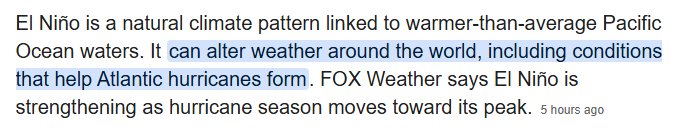
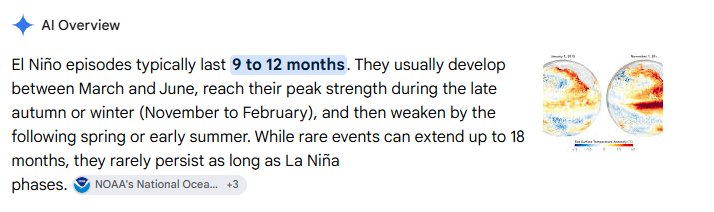
I’m going to copy and date your post Primus, and lets see what happens this winter and next summer after El Nino has finished it’s cycle…
Faces and eggs springs to mind…

UK winters become wetter as greenhouse gases rise
Published on: 11 February 2026
UK winters are becoming significantly wetter mainly due to warming driven by human burning of fossil fuels releasing greenhouse gases into the atmosphere, a Newcastle University study reveals.
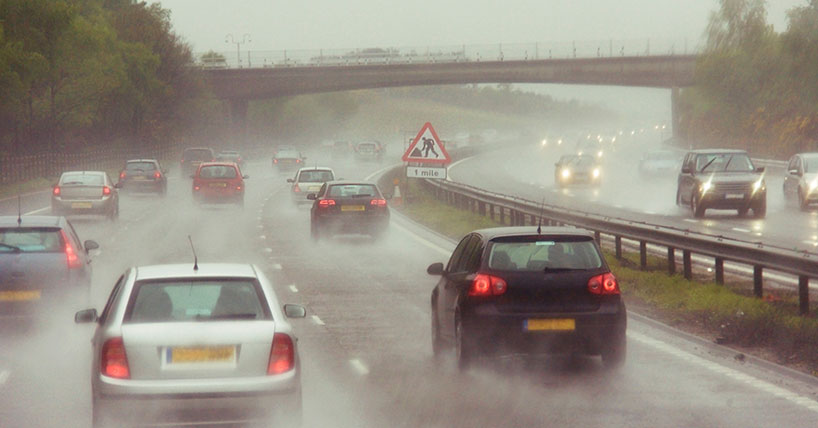
The research shows that for every degree of global or regional warming, winter rainfall increases by a compounding 7%, increasing the risk of flooding. And the scientists warn, it is happening much faster than most global climate models predict.
They looked at UK winter rainfall from 1901 to 2023 to investigate if the observed changes in winter rainfall in the UK are due to shifts in weather patterns (dynamical), or due to a warmer atmosphere being able to hold more moisture and produce more intense and larger rainstorms (non-dynamical or thermodynamic component).
Published in the journal Geophysical research Letters, the results show that the observed increase in winter rainfall in the UK is driven by rising temperatures from anthropogenic warming, rather than by changes in weather patterns. The volume of rainfall across the UK each winter is increasing by about 7% per degree of warming, which is consistent with the expected rate of moisture increase in a warmer atmosphere.
The experts also discovered that most state-of-the-art global climate models substantially underestimate how strongly winter seasonal rainfall is increasing with temperature. On average, the models predict only a 4% increase per degree of warming, much lower than the 7% increase per degree of warming found in historical observations.
20 years ahead of global climate models predictions
Study lead author, Dr James Carruthers, Newcastle University School of Engineering, said: “The findings from our research show that climate change has already made our winters significantly wetter, with a 7% increase in rainfall per degree of global warming. This is really concerning, as seasonal rainfall is increasing at a much faster rate than global climate models have predicted. We’re already experiencing changes in UK winter rainfall that global climate models predict for the 2040s – we’re 20 years ahead.”
“The UK Met Office data show that since the 1980s the UK climate has been warming at a rate of approximately 0.25°C per decade - so we’re seeing almost 9% more rainfall that we did in the 80s. October 2023 to March 2024 was the wettest winter half-year on record, although this year is giving it a run for its money!”
Professor Hayley Fowler, Professor of Climate Change Impacts at Newcastle University, and one of the study authors, said: “As I said in November at the National Emergency Briefing on the Climate and Nature Crises, the extra water that falls every winter across the UK from fossil-fuel induced warming would fill 3 million Olympic sized swimming pools. This predisposes the country to flooding as the ground is more generally saturated. This extra rainfall will continue to increase every year with additional global warming. We can only stop these increases in flooding by stopping the burning of fossil fuels.
“Our results show that the current severe flooding situation, with more than 100 flood warnings across the UK, will become more likely in the future. There is a widening gap between growing climate risks and action on adaptation. It is vitally important that we overhaul our planning and adaptation strategies, with increased investment being directed towards addressing this growing challenge. Without increased resources there is going to be increasing economic damages, and more casualties from these severe floods.”
The study builds on previous research by the team which found that Northern and central Europe are becoming significantly wetter, increasing winter flood risk. In contrast, the experts found that winters in the Mediterranean are becoming much drier, deepening drought and water scarcity. Their analysis reveals that global climate models significantly underestimate both the speed and magnitude of these changes to winter rainfall.
Reference:
Carruthers, J. G., Fowler, H. J., Bannister, D., & Guerreiro, S. B. (2026). Climate models tend to underestimate scaling of UK mean winter precipitation with temperature. Geophysical Research Letters, 53, e2025GL118201. https://doi.org/10.1029/2025GL118201
Latest News

Strange how industry in the UK burns less fossil fuels that at any time in the last hundred years, and hardly any houses are heated by coal. There are thousands of electric vehicles now compared to ICE vehicles. Coal fired power stations have been replaced with wind turbines and solar panels…Are they saying that none of this has made any difference?
The climate throwed me a challenge and I rised to it, worked through a three month heatwave, its bonkers but, its been done.
1 Like
It’s called GLOBAL warming
2 Likes
Don’t tell me that you had expected all the greenhouse effect gases, generated over 200 years, to simply disappear when they shut a coal fired electricity plant? Where did you think they would go?
1 Like
Well when that mountain erupted in Iceland and put thousands of tons of dust and particles into the atmosphere that grounded every aircraft this side of the Mason Dixon line, it all dissipated after a couple of weeks…And as soon as every house stopped burning coal, No more smog…
By your estimate we would still be living in total darkness after Krakatoa in 1883…
Between 19 May and 21 October 1883, began erupting, lasting more than five months. one of the deadliest and most destructive volcanic events in recorded …
There is a difference between particles in the air (risking damage to jet engines) but which eventually settle and gases that you cannot see…
1 Like