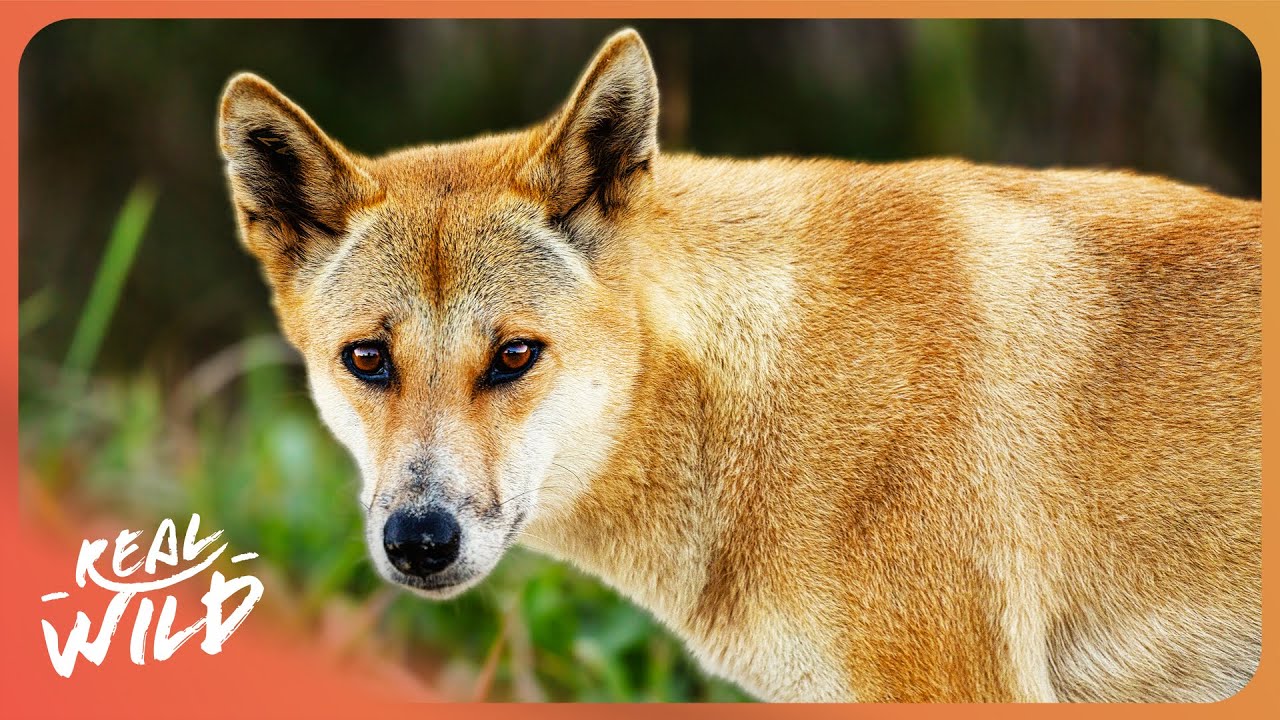
The Dingo is thought to have evolved from the Indian Wolf of the subcontinent.
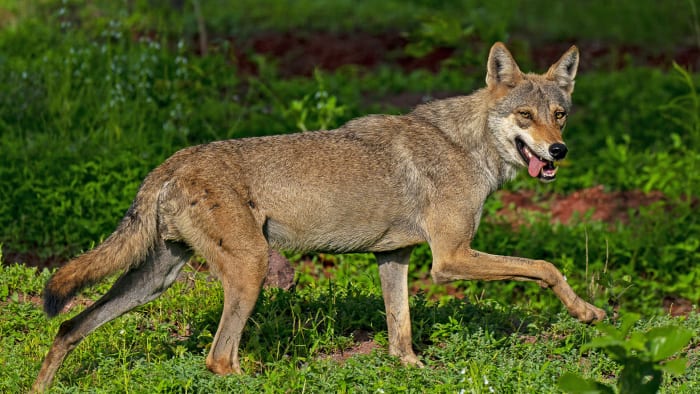
The Dingo made it to Australia from South-East Asia approximately 5000 years ago. Today it is regarded as a native Australian animal purely on the back of it being here so long.
With the extinction of the Tasmanian Tiger, the Dingo is the largest carnivorous land mammal in Australia.
The Dingo is found throughout most of mainland Australia.
Dingos are pack animals with sizes ranging from 3 - 12 animals. A family group typically includes an alpha male and female and they are highly territorial.
Their coats are commonly golden yellow, but they may have reddish, tan and black fur. They typically have white markings on their chest, feet and tail tip.
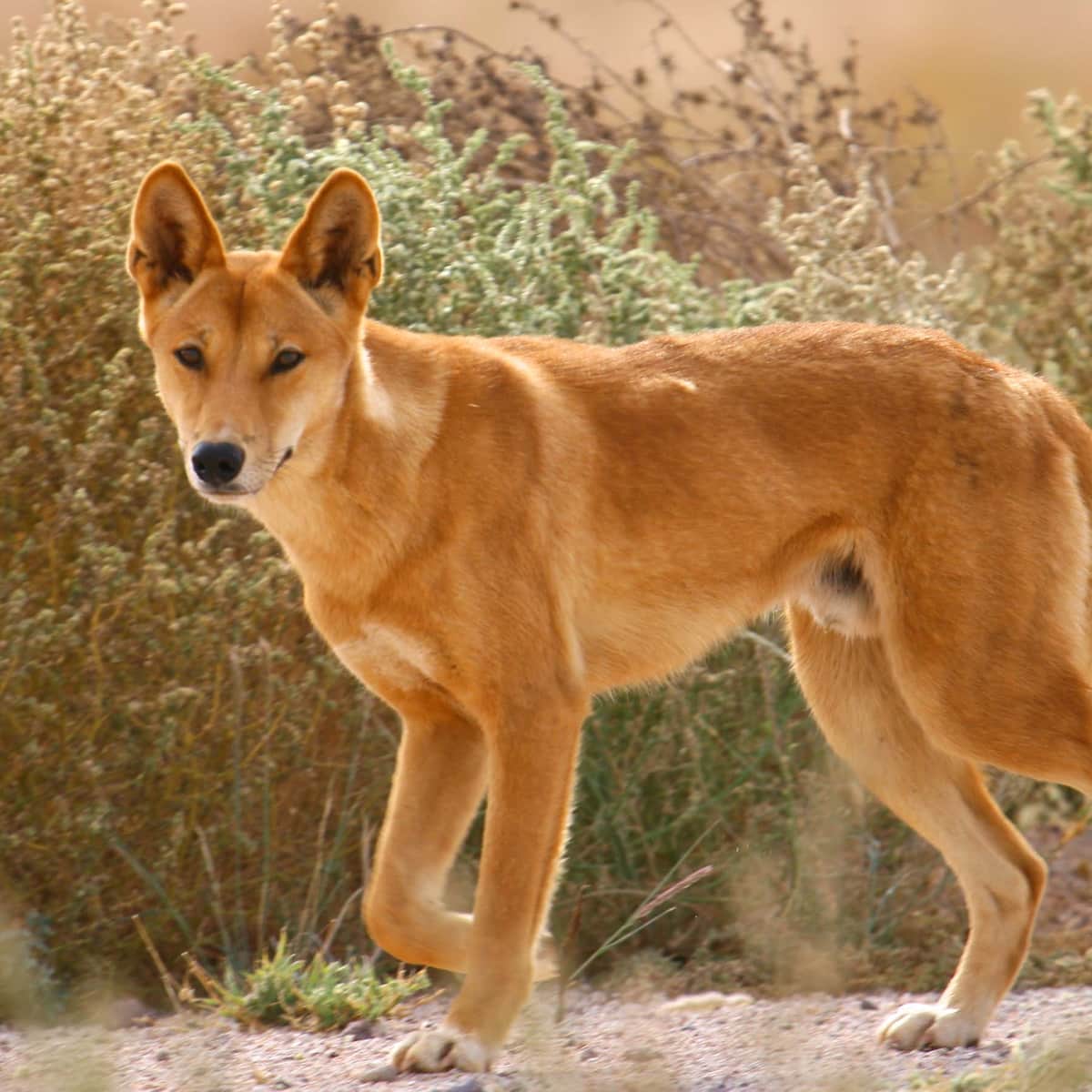
There is a strict breeding hierarchy with only the dominant male and female reproducing.
Females have 1 to 10 pups after a pregnancy of 9 weeks. The pups are weaned at 3-4 months.
Subordinate pack members help raise and feed the pups.
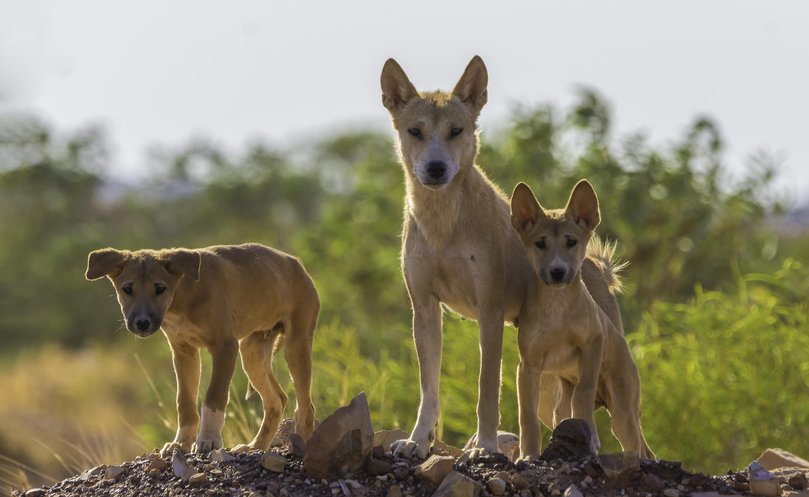
Dingos do not bark, they communicate with howls and scent markings to keep the pack together.
Dingoes are naturally lean, weighing between 13 kg and 18 kg and standing about 60 cm tall.
The bulk of their diet is made up of meat: they eat kangaroos, wallabies, feral pigs, wombats, small mammals such as rabbits and rodents, birds and lizards.
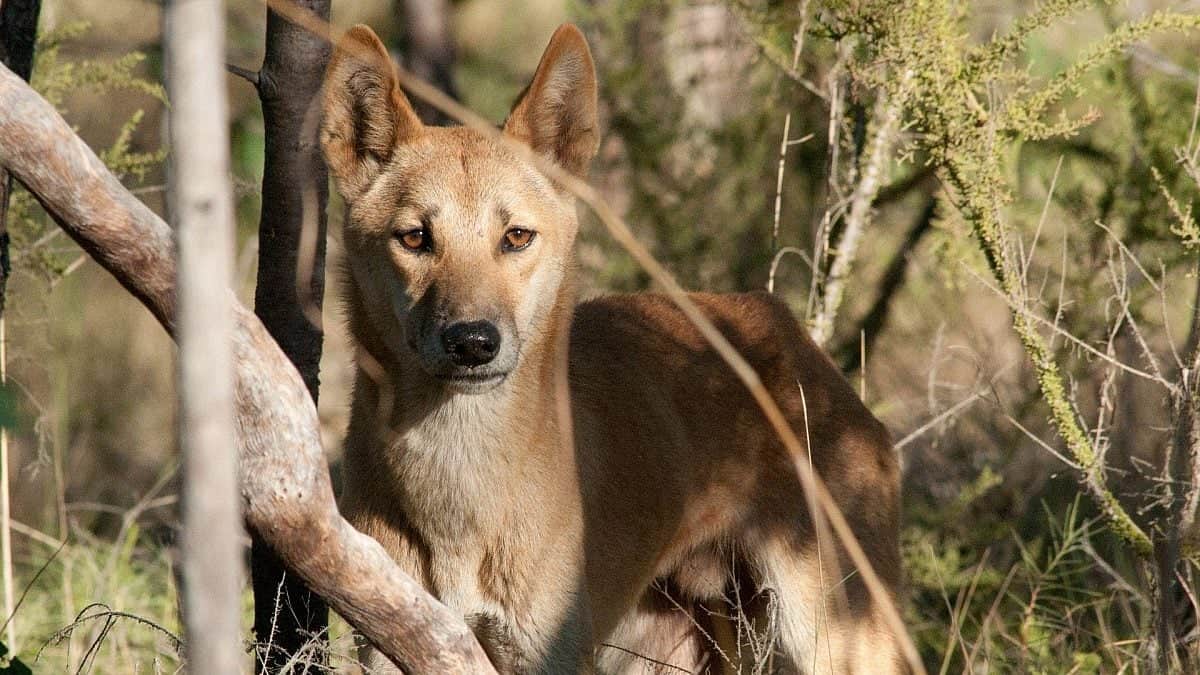
Dingoes are found across most of mainland Australia – from deserts to snow-covered alpine areas, from grasslands to rainforests, though they favour edges of forests next to grasslands.
They usually remain in one area but can cover large distances beyond their territory if conditions require or when young animals disperse.
Like many Australian species a major threat is habitat loss, although they’ve persisted in modified rural landscapes. While the animals that arrived in Australia up to 5,000 years ago have been shaped by the continent into a distinct form, this form is still capable of inter-breeding and hybridizing with imported domestic dogs – also ultimately derived from the wolf – and so are susceptible to dilution of the genetic stock characteristic of the Australian Dingo.
The Secret Life of Dingos