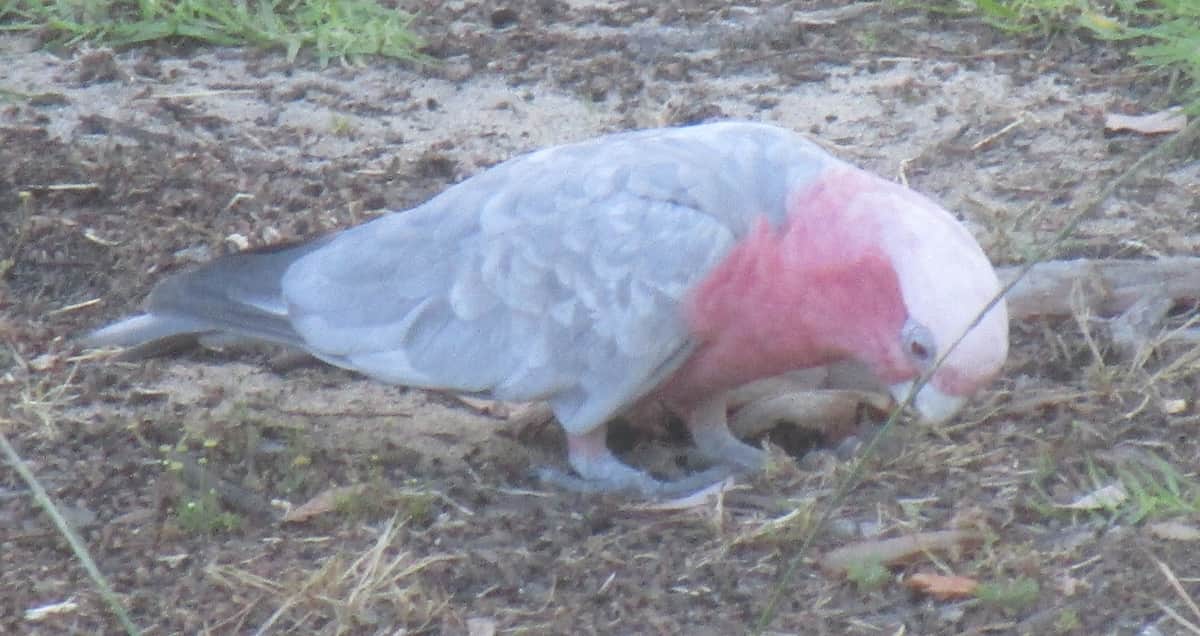
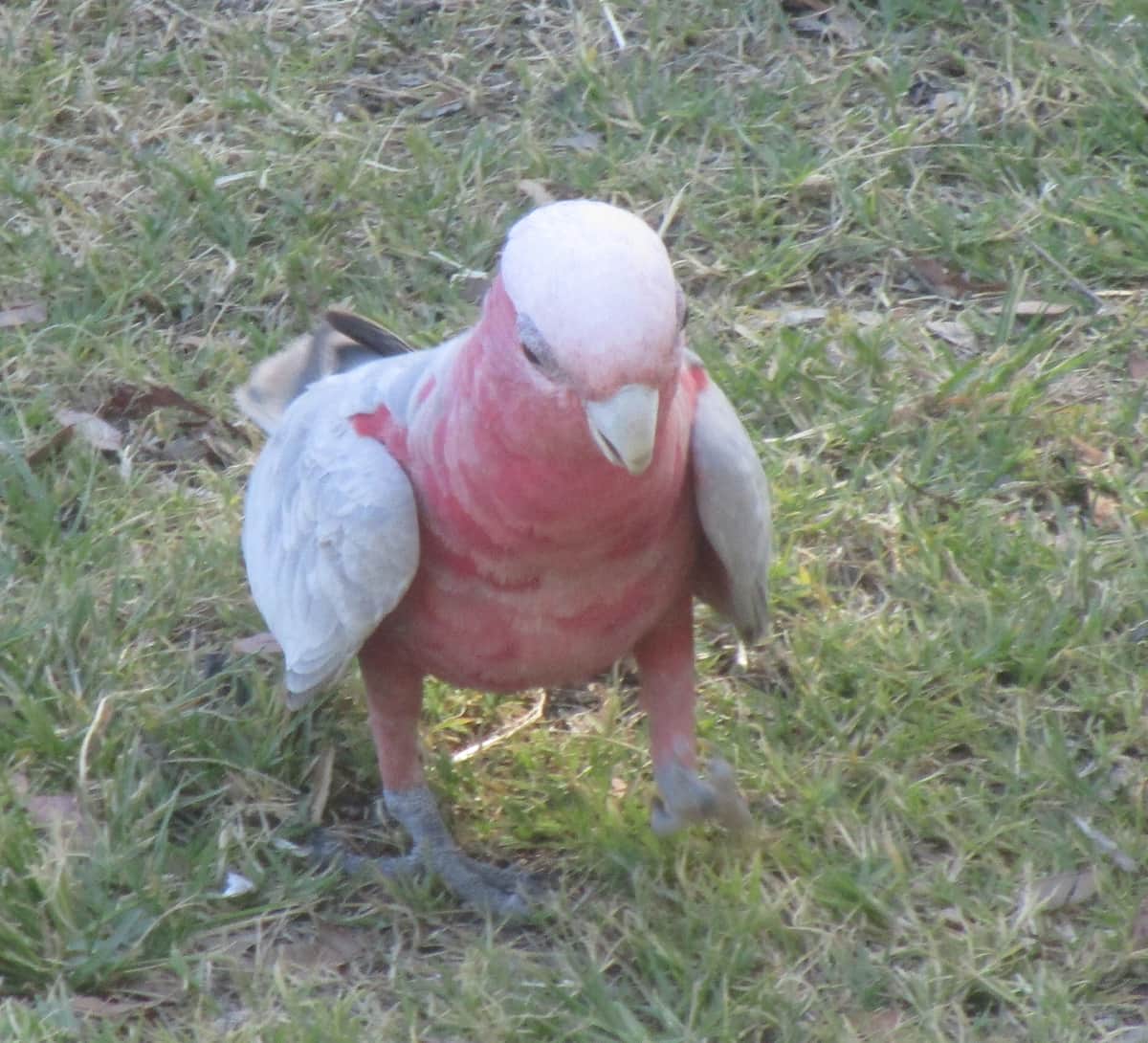
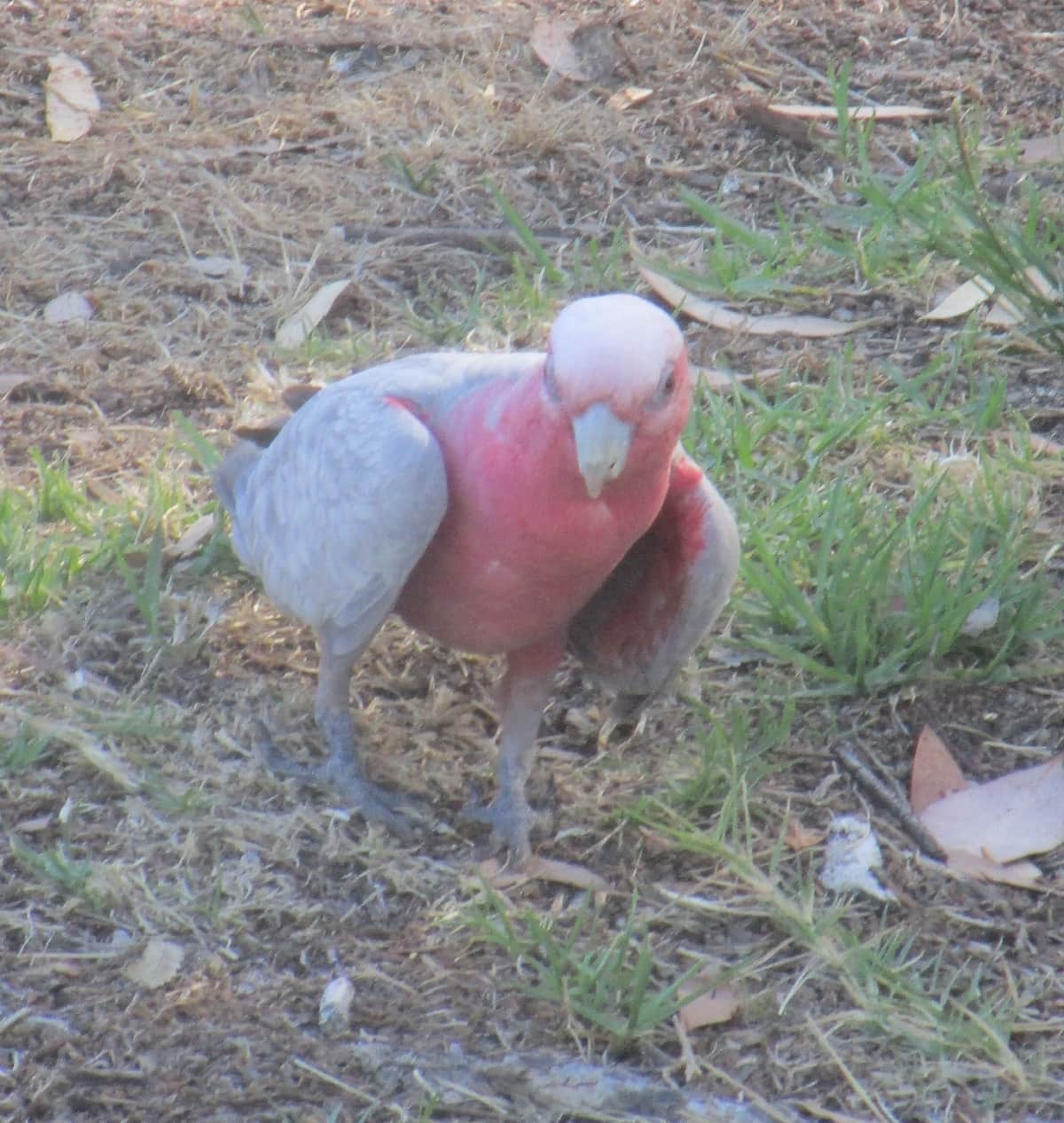
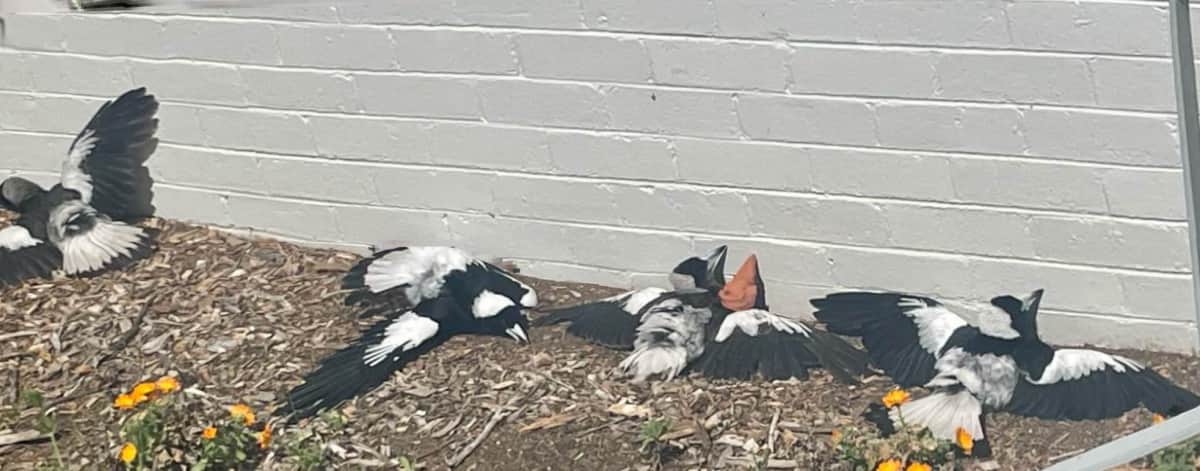
Galahs do not have sweat glands and the area under their wings has less feather coverage and contains major blood vessels.
By holding their wings slightly away from their bodies, the Galah - and birds in general - expose this area to the air, allowing heat to escape and cool the blood circulating near the skin.
Spreading their wings along with rapid, open-beak breathing increases airflow and facilitates the evaporation of moisture from their respiratory systems, further cooling them down.
What a great capture.
I watched a Wattle Bird spreading its wings during a downpour yesterday.
No doubt relishing a cool shower during the 100-degree heat.
When one is brought up in it is slightly tolerable.
Though I admit, as I age, I become less able to cope with the extreme heat.
I do not go out into the Aussie bush on extreme heat days.
This in an over 50s site.
Many of us know Fahrenheit temperatures. Including us Australians who started life when F came before C more than 50 years ago.
Generally speaking that is true on the East of the country the wind tends to come from the west so it has a large continent to dry out as it passes over.
In summer the humidity tends to be well below 50% sometime 20% but occasionally the wind comes off the sea and it is hot and humid.
In winter the low humidity makes it feel cold even with temps equivalent to an English summer.
My son lives in Darwin which is in the wet season so it is hot and humid (60/70+%) every day but he reckons he is used to it
WA is a bit backward with the Fahrenheit temperatures and the clocks being 2 or 3 hours behind.