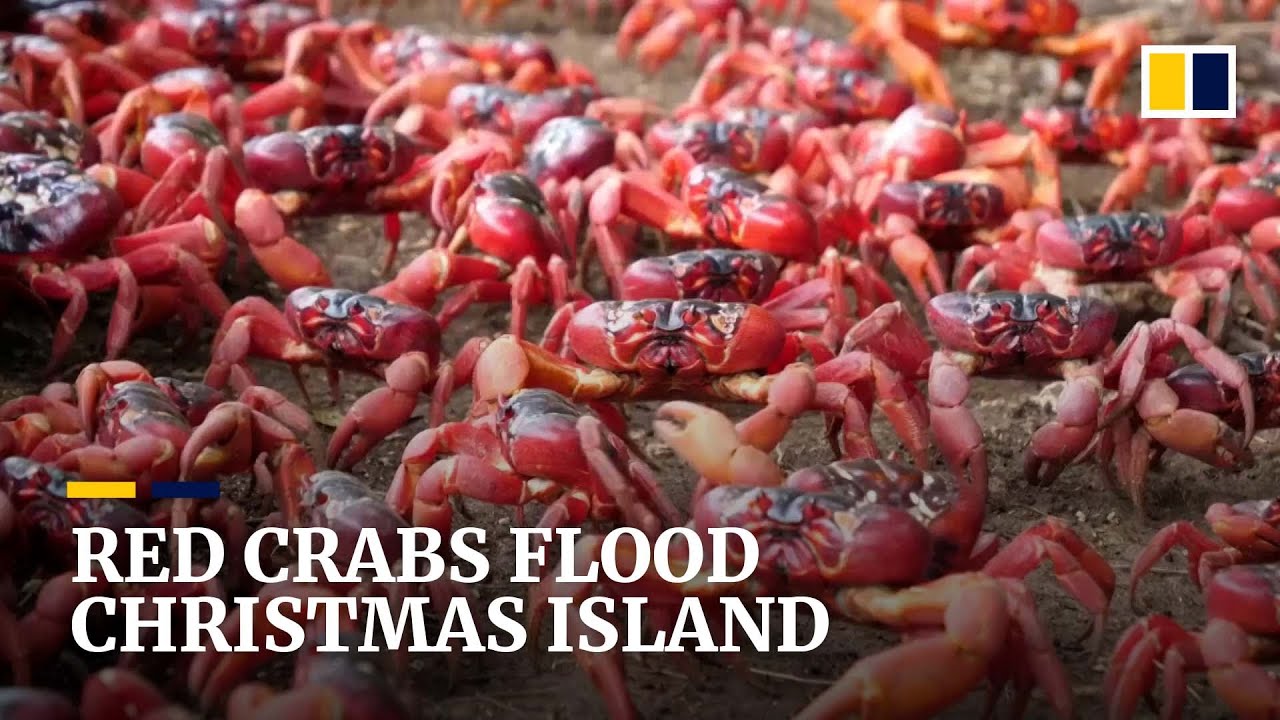
Each year Christmas Island’s red crab migration sees upwards of 65 million of the critters trek from tropical rainforests to the sandy coast, according to Parks Australia.
The entire migration process takes about three months and begins with the journey to the coast, where the males dig a burrow to breed in.
The females stay under the sand for incubation, before releasing their eggs into the ocean when the tide is right.
Scientists predict more than 2.5 trillion red crab babies were released into the water last migration season.
A resident said witnessing the migration was “spectacular” and a major force behind the island’s tourism, but the novelty did wear off after a few weeks.
“It does make life a lot harder around town to do the normal things like just drive down to the shop,” he said.
"There’s traffic management or the national park rangers out there with lollipop signs … forming convoys of cars to limit the flow of traffic over the crab areas.
Red Crabs March